
Roof insurance claim denied in Florida? What to do next
Roof insurance claim denied in Florida? Why insurers deny roof claims, the deadlines that apply, and the steps to dispute a denial or lowball payment.
 By Simon NicholsonFounding attorney, Sunshine State Law Firm
Claim denied or underpaid? Talk to an attorney for free. No fee unless we recover.
If your roof insurance claim was denied in Florida, the denial isn't necessarily the final word. Get the denial and the adjuster's estimate in writing, compare them to your policy, document the damage with a licensed roofer, and act quickly. Florida's claim deadlines are short, and a policy review often shows the denial was wrong or the payment too low.
A roof claim denial lands hard. Repairing or replacing a Florida roof can cost thousands to tens of thousands of dollars, and you paid premiums so you wouldn't have to cover that alone. Here's why roof claims get denied, the rules that apply, and what to do next.
Why roof insurance claims get denied
Insurance companies give a handful of reasons over and over. Some are legitimate. Many are worth challenging.
"Wear and tear" or "age of the roof"
This is the most common reason we see. The insurer says the damage came from age and deterioration, not a covered event like wind or a falling tree. But storm damage on an older roof is still storm damage. Lifted or creased shingles, missing tabs and fresh debris impact can point to wind, and a licensed roofer's inspection can document the difference.
Some Florida policies pay actual cash value (replacement cost minus depreciation) for older roofs instead of full replacement cost. Check your declarations page and any roof endorsement, because that changes what a fair payment looks like.
"The damage was there before"
Insurers sometimes call damage "pre-existing" or "long-term," especially for leaks. Photos of your roof before the storm, past inspection reports, and repair receipts all help here. If you've just bought the home, your home inspection report may show the roof's condition at closing.
The loss is excluded
Policies exclude some causes of loss, like flood (covered separately), mold beyond a set limit, or "faulty workmanship." Exclusions are written broadly, and insurers sometimes apply them where they don't fit. Whether an exclusion really applies depends on the exact policy wording and the cause of the damage.
The deductible is higher than the damage
Many Florida policies have a separate hurricane deductible, usually a percentage of your dwelling coverage, such as 2% or 5%. On a home insured for $300,000, a 2% hurricane deductible is $6,000. If the insurer's estimate comes in under that, you'll get a "no payment" letter that reads like a denial. A low estimate is often the real problem.
Late notice
If the insurer says you reported the claim too late, check the dates carefully. Florida set shorter deadlines in recent years (see below), and insurers enforce them.
Florida deadlines that apply to roof claims
| Step | Deadline (generally) |
|---|---|
| Report a new or reopened claim | Within 1 year of the date of loss |
| File a supplemental claim (for additional damage or costs) | Within 18 months of the date of loss |
| Insurer acknowledges your claim | Within 7 days of your notice |
| Insurer pays or denies the claim | Within 60 days of your notice, in most cases |
| Notice of intent before filing a lawsuit | At least 10 business days before suit |
These deadlines come from changes Florida made in 2022 and apply to most policies and losses since then. Older losses and some policies follow different rules, so have someone check the dates for your claim.
What to do after a roof claim denial
- Get everything in writing. Ask for the denial letter, the adjuster's estimate, inspection photos and any engineer's report. Florida law requires insurers to explain a denial in writing, based on your policy.
- Read the specific reason. Note exactly which policy provision the insurer relied on. "Wear and tear" disputes and "exclusion" disputes are handled differently.
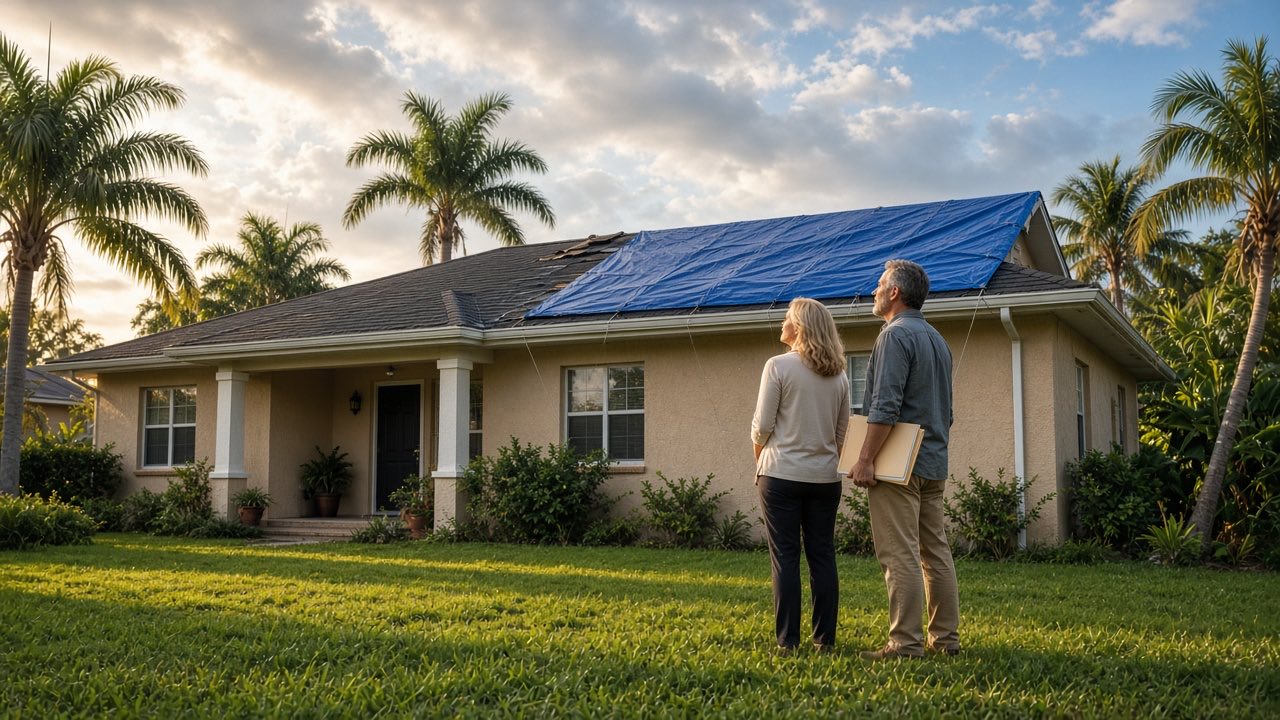
- Protect the roof from further damage. Tarp it, keep receipts, and photograph the repairs. Most policies require reasonable steps to prevent more damage, and the costs are usually part of the claim.
- Get your own inspection and estimate. A licensed roofing contractor can document storm-related damage and the true cost of repair or replacement. Photos with dates matter.
- Gather your history. Pull together older photos of the roof, past inspections, permits and repair receipts.
- Don't sign a release or cash a check marked "final payment" until you understand what you're giving up.
- Get a policy review. Insurance policies are long and technical. A review often finds coverage the denial letter skipped over. We offer a free policy review for Florida homeowners.
Your options for disputing a denial or lowball payment
- Request a reinspection. Send your roofer's findings and ask the insurer to reconsider in writing.
- Appraisal. Many policies include an appraisal clause for disputes over the amount of the loss. Each side picks an appraiser, and an umpire settles any difference. It doesn't usually resolve whether something is covered at all.
- State mediation. The Florida Department of Financial Services runs a free mediation program for many residential property claim disputes.
- A lawsuit. If the insurer won't pay what it owes, you can sue for breach of the policy. Florida requires a notice of intent to initiate litigation at least 10 business days before filing, which gives the insurer a final chance to resolve it.
Florida also changed how attorney's fees work in property insurance cases in late 2022. Ask any lawyer you talk to exactly how fees work for your claim. We explain ours in writing at the first meeting.
Public adjuster or attorney?
A public adjuster can help document and negotiate a claim, for a fee that Florida law caps as a percentage of the payment. An attorney can do that and more: read the policy as a legal contract, advise you on deadlines and your rights, handle appraisal, send the pre-suit notice and file a lawsuit if needed. If your claim has been flatly denied, or the insurer is citing an exclusion, a lawyer's review is usually the better first step.
Frequently asked questions
Can I reopen a denied roof claim?
Often, yes, if you have new information, like a roofer's report showing wind damage. Florida generally allows a reopened claim within one year of the date of loss, and a supplemental claim within 18 months. Send the new evidence in writing and keep copies.
Will filing a roof claim raise my premium?
It can, and insurers may consider claim history at renewal. But a legitimate storm claim is what your coverage is for. Not filing a valid claim to avoid a possible rate increase can leave you paying thousands out of pocket.
How long does a roof claim dispute take?
It depends on the path. A reinspection can resolve things in weeks. Appraisal and mediation often take a few months. A lawsuit takes longer. Starting early and documenting well tends to shorten every option.
A denial letter isn't the end of your claim. If your roof claim was denied or underpaid, get a free policy review. We'll read your policy and the denial with you, explain your options in plain language, and push back on the insurance company when the facts support it. Learn more about the property claims we handle.
Written by
Simon Nicholson, founding attorney
Founded the firm after 15 years serving families in Guatemala and Mexico.
Read Simon’s bioThis article is general information about Florida law, not legal advice for your situation. Laws change, and every case is different. Reading it doesn’t create an attorney-client relationship.