Halloween safety tips for Florida families
Halloween safety tips for Florida families: staying visible while trick-or-treating, safer costumes, careful driving and a safe home for visitors.
 By Simon NicholsonFounding attorney, Sunshine State Law Firm
Need help after an accident or a denied claim? Talk to an attorney for free. No fee unless we recover.
The most important Halloween safety tips are about being seen and slowing down. Give kids flashlights and reflective gear, walk with children under 12, choose costumes they can see and walk in, and drive slowly through neighborhoods from dusk on. If you're handing out candy, light your walkway and clear anything someone could trip over.
Halloween is one of the best nights of the year in a Florida neighborhood. It's also one of the riskiest for people on foot. A study published in JAMA Pediatrics found that pedestrian deaths were about 43% more likely on Halloween night than on comparison evenings, with children at the greatest risk. More kids out after dark, drivers distracted by the scene, and costumes that block vision all add up. Here's how to keep the night fun.
Trick-or-treating safety for kids and parents
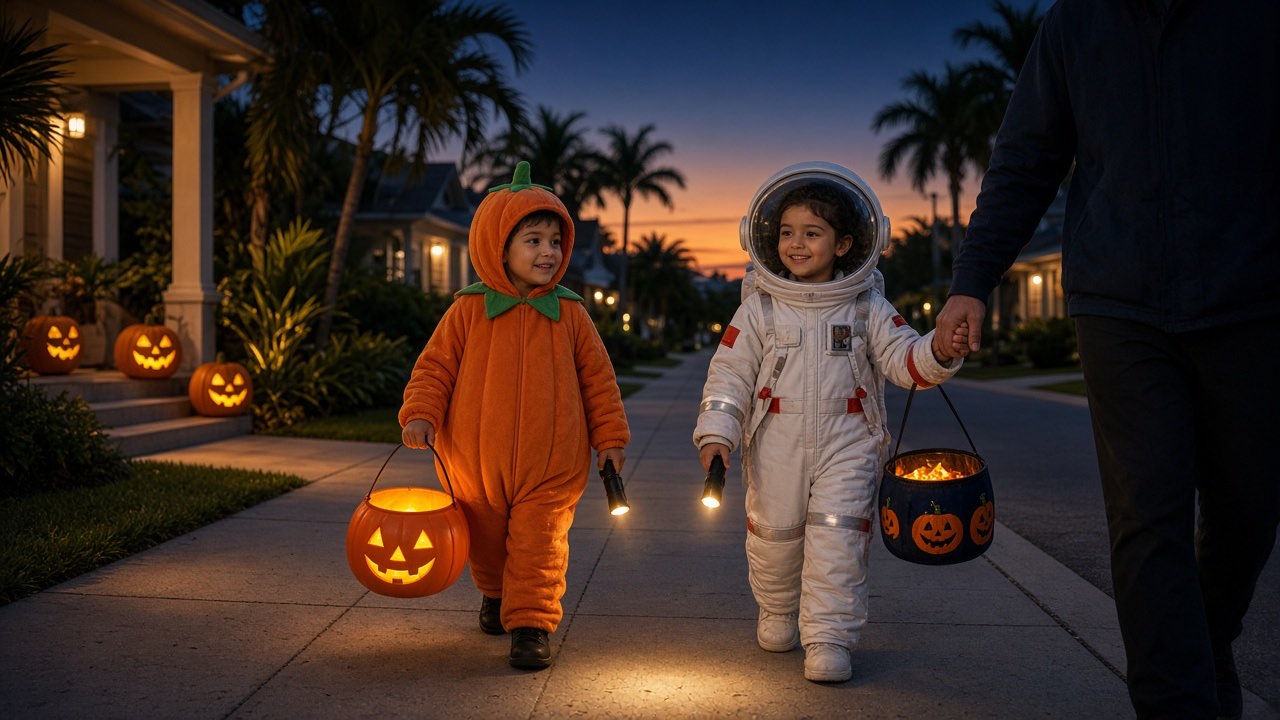
Make everyone easy to see
Most Halloween fun happens around sunset and after dark, when drivers have the hardest time spotting small, moving people.
- Carry a flashlight or headlamp. It lights the path and tells drivers someone's there.
- Add reflective tape to dark costumes, bags and shoes.
- Use glow sticks or light-up bracelets for younger kids. They love them, and drivers notice them.
- Choose bright colors when you can.
Walk with young children
Children under 12 should trick-or-treat with an adult. Older kids who go with friends should stick to a planned route, stay in a group, carry a phone, and have a check-in time.
Go over the basics before you head out:
- Walk, don't run, from house to house.
- Use sidewalks. Where there aren't any, walk facing traffic, as far from the road as you can.
- Cross at corners and crosswalks, and look both ways first.
- Never dart out between parked cars.
- Stay on well-lit streets, and only visit homes with a porch light on.
- Never go inside a stranger's home or car.
Pick a costume that's safe to wear
A great costume shouldn't make it hard to see, walk or breathe.
- Swap masks for face paint when possible. Masks block side vision. If your child wears one, have them take it off while walking between houses. Test face paint on a small patch of skin first.
- Check the length. Hem anything that drags so no one trips on the stairs or curb.
- Wear real shoes. Comfortable sneakers beat costume shoes for a long walk.
- Look for "flame resistant" on the label, especially around jack-o'-lanterns with candles.
- Keep props soft and short. Swords, wands and staffs should be flexible.
- Dress for Florida weather. Late October can still be warm and humid. Bring water, and choose breathable fabrics so kids don't overheat.
Check the candy
Look through treats at home before kids dig in. Toss anything unwrapped, torn or homemade from people you don't know. If your child has a food allergy, read labels carefully. Some families put out a teal pumpkin to show they offer non-food treats like stickers or glow sticks.
Halloween driving safety
Drivers carry most of the responsibility on Halloween night.
| Situation | What to do |
|---|---|
| Driving through a neighborhood | Go well below the speed limit and expect kids to step out anywhere |
| Pulling in or out of a driveway | Back out slowly, check mirrors and look behind the car first |
| Passing parked cars | Watch for kids crossing between them |
| Driving kids between neighborhoods | Use car seats and seat belts every time |
| Leaving a Halloween party | Plan a sober ride ahead of time |
Slow down and put the phone away
The busiest window for trick-or-treaters is usually from dusk until about 9 p.m. Turn your headlights on early, skip the phone entirely, and don't stop in the road to take photos. Pull over somewhere safe instead.
Keep kids buckled, even in costume
Bulky or padded costumes can keep car seat harnesses and seat belts from fitting snugly. Have kids change into padded costumes when you arrive, or choose costumes without extra padding. Let children out on the curb side, away from traffic, and turn on your hazard lights while they're getting in and out.
Golf carts and neighborhood events
In many Florida communities, families make the rounds by golf cart. Treat it like a car: a sober, experienced adult driving, kids seated, no one riding on the back, and lights on after dark.
Celebrate responsibly
Halloween parties are often adult events too. If you drink, don't drive. Arrange a designated driver or rideshare before you go.
Tips for homeowners handing out candy
If you're welcoming trick-or-treaters, a few steps make your home safer:
- Light the path. Turn on porch and walkway lights, and add solar stakes or string lights along the route.
- Clear trip hazards. Move hoses, cords, toys, planters and decorations off steps and walkways.
- Fix what you can. Loose railings, uneven pavers and broken steps are easier to trip on in the dark.
- Use LED candles in jack-o'-lanterns, especially near walkways and costumes.
- Secure pets in a quiet room. A doorbell that rings all night can stress even friendly dogs.
- Lock pool gates. If you have a pool, make sure the gate is closed and latched so curious kids can't wander in.
Florida property owners are generally expected to keep their homes reasonably safe for visitors. These steps protect your guests and you. If someone does get hurt on another person's property, our guide on what to do after a slip and fall explains the next steps.
If someone is hurt on Halloween
Get medical care right away, even if the injury seems minor. Kids don't always say when something hurts. If a careless driver or an unsafe property caused the injury, take photos, get names of witnesses, and keep track of medical bills. When you're ready, we can talk about the injury cases we handle, in English or Spanish. If it involved a car, our guide to common mistakes to avoid after a car accident is a good place to start.
Frequently asked questions
What age can kids trick-or-treat without a parent?
There's no legal age in Florida. Safety groups generally recommend that children under 12 go with an adult. Older kids can go with friends if they know the route, stay together, carry a phone and a flashlight, and check in at set times.
What time is safest to trick-or-treat?
Going out just before sunset gives you daylight for the start of the route and makes it easier for drivers to see kids. Many neighborhoods are busiest from dusk to about 9 p.m. Check whether your city or HOA sets suggested hours.
Halloween should be about costumes, candy and neighbors, not emergencies. Light the way, slow down, and keep an eye out for the smallest trick-or-treaters. From all of us at Sunshine State Law Firm, have a safe and happy Halloween.
Written by
Simon Nicholson, founding attorney
Founded the firm after 15 years serving families in Guatemala and Mexico.
Read Simon’s bioThis article is general information about Florida law, not legal advice for your situation. Laws change, and every case is different. Reading it doesn’t create an attorney-client relationship.